

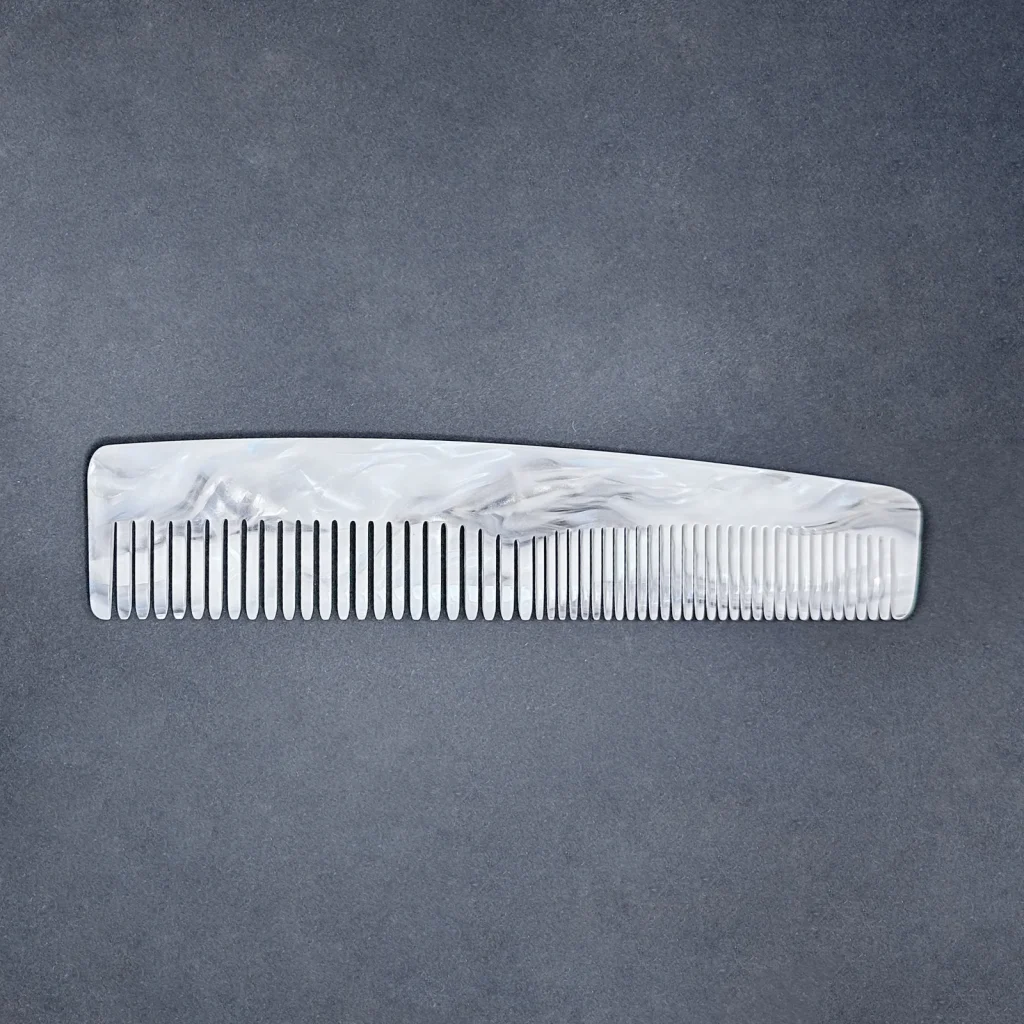
The main cellulose acetate comb benefits are design flexibility, color and pattern options, and the ability to refine the teeth and edges through machining and finishing. Those benefits depend on the finished comb. A material name alone does not tell you how it will feel, how well it will suit a particular routine, or how consistently it will be made.
For a brand developing a comb, that distinction matters. A polished surface can look convincing in a product photograph while leaving the tooth tips or the spaces between them poorly finished. The useful question is not simply “Is it acetate?” It is “What has been specified and checked on this acetate comb?”
Color can be part of the design, not an afterthought
Cellulose acetate is a modified cellulose material used in several forms, including formulated plastics for accessories. Plasticizers and other formulation choices influence its behavior. It should not be described as untouched plant fiber or as a material with one universal set of properties.
For comb design, one attraction is the range of visual directions: clear and lightly tinted pieces, solid colors, pearl effects, layered contrasts and tortoiseshell-style patterns. An appropriate material reference helps a buyer discuss more than a general color name.
A translucent comb changes appearance with its thickness and the background behind it. A layered design may show a different color at the edge. An irregular pattern can look balanced on one part and almost solid on another. These are reasons to inspect a finished sample rather than approve production from a small screen swatch.
The advantage is the opportunity to build a distinctive collection. The trade-off is that the visual specification needs to be more precise than “same as the photo.”
Tooth layout can be developed around the intended use
Fine teeth, wide teeth, the length of the teeth, the spacing between them and the shape of the handle all affect how a comb is used. Material selection does not replace these decisions.
A compact comb carried in a pocket presents different requirements from a larger styling comb. A dual-spacing design may be convenient, but both sections still need to be reviewed on their own. The transition between the two tooth layouts can also create an awkward area if it is treated only as a visual detail.
Start with the user and the task. Then define the geometry. A transparent acetate comb reference can be a starting point for discussing thickness, tooth arrangement and profile; it is not a promise that one layout suits every hair type.
Where possible, assess the sample using the intended routine. Do not assume that wider teeth automatically prevent breakage or that a material choice can replace appropriate technique.
Edge finishing is a practical benefit when it is specified properly
When CNC machining is used, it defines the profile. Finishing determines much of what the hand and hair encounter afterwards.
The outside perimeter is only one area to check. Tooth tips, the sides of the teeth and the roots of the gaps need attention too. A glossy face does not prove that all those areas have been rounded and finished consistently.
A useful sample review includes:
- A slow visual inspection of the tips and the spaces between teeth.
- A check for sharp edges, remaining burrs and visible machining marks.
- A comparison of tooth shape and spacing across the whole comb.
- A trial using the sample for the intended task and user.
The goal is an agreed finish, not the vague instruction “make it smooth.” If a particular edge shape matters, show it in a drawing or identify it on an approved sample.
Customization extends beyond adding a logo
Private-label work often begins with a logo, but the harder decisions usually come earlier: proportions, tooth spacing, transparency, pattern placement and the finish of visible edges.
Branding also needs its own review. Text that reads clearly on a solid sample may be harder to see against an irregular pattern. A logo placed near a thin tooth or a heavily curved area may need a different position or method. Packaging should protect the surfaces that have just been finished, not merely hold the right number of pieces.
Check the logo and packaging with your sample. Confirm the artwork version, position and appearance after finishing. Choose from our existing packaging options, add your logo and check how the comb sits inside. Confirm the details for your design before production.
Benefits that should not be assumed
“Acetate” is not evidence that a comb is unbreakable, hypoallergenic, completely biodegradable or guaranteed to reduce static. Nor does it establish a medical benefit for the scalp or hair.
Durability depends on the formulation, geometry, use and care. Environmental statements need evidence for the particular material and the stated disposal conditions. Performance claims need an appropriate test rather than a sentence repeated from another product listing.
For ordinary care, follow the instructions agreed for the finished product. If repeated washing, heat exposure or contact with styling products is expected, make that part of the development brief and assess suitable samples before making a claim to customers.
A better way to compare samples
When reviewing two combs, write down what differs. “This one feels better” is useful feedback, but it is not yet a production requirement.
Record the overall dimensions, the tooth arrangement, the edge treatment, the selected material reference and the areas that must look consistent. Keep the approved drawing revision with the approved physical sample. If you change the tooth spacing after approval, treat it as a change to the design rather than a minor color update.
The strongest reason to choose cellulose acetate is not a sweeping promise about the material. It is that a well-developed comb can combine a distinctive appearance with geometry and finishing suited to the intended product.
Browse our acetate comb design references for a starting point. We process acetate into finished products and completed components; raw sheets and cut blanks are not sold separately. Send a drawing or reference sample for a design review, with the tooth layout and finish you want to evaluate.
Technical reading: Mazzucchelli 1849: cellulose acetate and formulation background. The material discussion is general; no supplier relationship is implied.